Archive for October, 2009
A NATIONAL DISGRACE.
by Martyn on Oct.31, 2009, under Personal
It’s awful. Like so many other things the British railway network has been infected by a practice that has found its way over the Atlantic. Forget about the need for massive investment in the railway infrastructure; forget about the exorbitant fares and the bewildering array of ticket prices. This is all about the nature of customer care and satisfaction and lies at the heart of the train – the buffet car.
I do not understand why Johnny Foreigner has such a problem with making and presenting a cup of tea; it is, after all, an international beverage with universal appeal. Go anywhere south of Dover and you are immediately forced into abandoning the most civilised of brews and adopting ugly coffee as your preferred refreshment; not out of choice but because tea that is served abroad has only one common feature that it shares with a domestic cuppa and that is its name.
Whilst you can anticipate that once you leave the White Cliffs behind you will not get a decent cup of tea until you return to the sceptred isle it is most disturbing to find that repugnant continental and north American attitudes towards tea in general, and the making of it in particular, are embedding themselves in British institutions – the rail service for one. It’s a disgrace.
Making a cup of tea is not difficult. You need boiling water – that means water that is or has just been boiling. Not water that is really hot or water that has been boiled. I remember explaining this to a really helpful waiter in a Cracker Barrel restaurant in the U.S. to whom I explained that in order for the tea to release its true flavour it has to be scalded. Only boiling water will release the full flavour of the tea and water that is any less than boiling will simply turn into a weak version of a true cuppa. That’s it. The only rule you must follow. Pour boiling water onto tea leaves or a tea bag, though why anyone wants to taste paper in their tea is beyond me. You can pour the boiling water onto tea leaves in a cup, or in a kettle or, preferably, into a warmed tea pot (metal ones should be avoided as they go cold quickly). That’s it – just one rule to follow – pour boiling water onto the tea.
I am on a train. I have just been parted from £1.30 that I gave to the man in the buffet car in exchange for a cup of tea – albeit a cup of tea served in a paper cup and with the now ubiquitous strip of wood that serves as a stirrer. I knew what to expect. It would be less than perfect but hey, compromises have to be made when travelling at 125m.p.h. I could see the steaming shining stainless steel tap that rose out of the kitchen worktop. I could hear it hissing as pressurised steam escaped from it. £1.30 was a price well worth paying for a jolly good hot cup of tea. I took my eye off the ball after I had ordered and was presented with a paper bag that held the tea. I popped in the stirrer and one of those fiddly sachets of sugar and paid the man.
I made my way back to my seat and took out the cup that had a plastic lid on it. I set it out on the table and sat back to let the tea stew. After five minutes waiting I could hold back no more and I took off the lid. I was greeted by a cup of hot water. No tea. No teabag. Just a cup of hot water. Peering into the paper bag I found a teabag. I dropped it in the water and sighed. Can you imagine that happening ten years ago? It is time to make a stand. If you get such service don’t do what I didn’t have the guts to do – ask for a refund!
Now A Parliamentary Debate
by Martyn on Oct.31, 2009, under Pernicious Anaemia Society
Following on from the Parliamentary Reception, I have just been informed that Madeleine Moon has now been granted a debate about Pernicious Anaemia that is scheduled to take place on Wednesday evening. I am now busy trying to put together another Factsheet or Briefing Paper that all M.P.s can read.
Ho Hum
The Parliamentary Reception
by Martyn on Oct.31, 2009, under Pernicious Anaemia Society
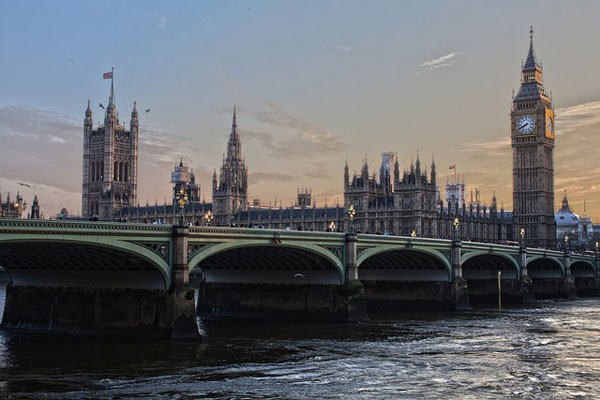
And so it is over. After months of fact-finding, and weeks of planning, the Parliamentary Reception has taken place at the House of Commons in London.
The idea began as a germ when I met with Mary Southcott back in the beginning of the summer. “Madeline Moon suggested that we could hold a Parliamentary Reception” she told me, on a train to London. Mary works within the Palace of Westminster and knows many influential M.P.s and government ministers. She had met Madeline the previous week and sought to enlist the help of Madeline.
“What’s that?” I asked.
“It’s just that. We hold a Reception for M.P.s and try and get them along so that we can tell them about the problems that our members are experiencing.
“Why should they attend?”
“Well, what you could do is to get your members to write to their M.P. and ask him or her to attend the Reception. That way they might feel obliged to attend?” said Mary.
I taught academic politics for twenty years, was an examiner for A-Level Government and Politics and had been a campaign manager for prospective holders of public office. Yet I had never heard of a Parliamentary Reception. Mary’s eyes twinkled. “We could even get an Early Day Motion tabled and ask our members to ask their M.P. to sign it.
I knew what an Early Day Motion (E.D.M.) was and is. Basically it is a call made by a backbencher
who calls for a motion (or subject) to be debated at an “early day” – that is in the very near future. They stand almost no chance whatsoever of being debated in full by the House of Commons, but they can be used to gather support of backbenchers to a cause. I knew that if we could get ten, maybe twenty, backbench M.P.s to support an E.D.M. then it would be grist to our mill.
“Who could we get to table the E.D.M?” I naively asked.
“We could get my daughter’s M.P., he knows of her plight and the difficulty she has had in getting diagnosed. Indeed she is still not diagnosed”.
I knew that we were onto something.
And so the scene was set for the society to get, for the first time, an enquiry into the Symptoms, Diagnosis and Treatment of Pernicious Anaemia reviewed. We agreed that the Review I had published would form the basis of the E.D.M. and we would make arrangements for the Parliamentary Reception to be held.
And so it was that, for the greater part of the summer of this year I was preoccupied with organising the E.D.M. and Reception. Liaising with Madeline and Mary was not easy as both are very busy people. But slowly, the plot came together and our members were involved in asking them to write to their M.P. using a template of a letter that we produced. We then produced a Fact-sheet to brief M.P.s about our cause, then produced a Statement written by me, and we then started to compile a list of ‘Pub-Facts’ that could be used as sound bites to gather interest in our cause.