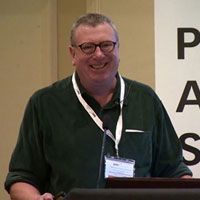
Martyn Hooper

Pernicious Anaemia Society

Pernicious Anaemia and Dementia

by on Jul.04, 2010, under Pernicious Anaemia Society

Today marks the beginning of Dementia Awareness Week that is being organised by the Alzheimer’s Society in the U.K.

A free supplement appeared with last Sunday’s Telegraph newspaper that gave all kinds of information about Dementia.  On page 5 was a list of nine symptoms of Dementia and it was suggested that the reader should seek help  if he or she:

Struggles to remember recent events, although you can easily recall things that happened in the past

Finds it hard to follow conversations or programmes on TV

Forgets the names of friends or everyday objects

Cannot recall things he or she has heard, seen or read

Finds it difficult to make decisions

Notices that they repeats themselves or loses the thread of what they are saying

Has problems thinking and reasoning

Feels anxious, depressed or angry about their forgetfulness

Finds that other people comment on their forgetfulness.

People suffering from Pernicious Anaemia but were not diagnosed early will identify with most, if not all, of the above.  It is obviously very easy for doctors to listen to a patient who has B12 Deficiency recite all or most of the above and to diagnose Alzheimer’s disease.  It megs the question as to how many patients are being treated for Dementia when they are suffering from lack of Vitamin B12.  I suspect that this is the case with many patients who might have been wrongly diagnosis as suffering from Alzheimer’s.

Anyway – good luck to the Alzheimer’s Society with their Awareness Week.

1 Comment more...

You Can Trust A Victorian

by on May.23, 2010, under Pernicious Anaemia Society

It was all very confusing.  Her name was Victoria and she wanted to let me have a large office, in the middle of Bridgend, for free, for nothing, at no cost – completely free.

“What do you mean – how can it be for free?”

“I don’t know” replied my wife, talking as quickly as she could because I was on my mobile in the Canary Islands whilst she was at home.  “She just phoned up and asked to speak to you and told me that there was a large office that needed a tenant and that it was free”.

I didn’t believe it of course.  It was a way of getting the charity to part with money.  Landlords rent offices, they don’t give them away to charities for free.  I was annoyed.  I wanted more information and knew I would have to wait until I got home to investigate the scam.  I returned to the poolside and tried to figure out what this could all be about.

The office that the society rents costs £550 per month although we have been informed that as of this month the rent will increase to £585 per month.  Like most charities we struggle to raise funds and the financial burden of the rent was always a worry.  We need the office because, although I ran the office for two years from my converted garage, the activites that we now undertake are ten times what I used to do.  And we now have two full-time employees (well, sort of have two full-time employees – their salaries are paid for by the Welsh Assembly Government but they work for the society) and until last week when Nic left us to enter into full-time employment, four part-time volunteers.  When we are all in the little office it gets quite crowded and so we stagger the days on which volunteers come in to help.

Her name was Victoria.  I was to telephone a number she had left with my wife to find out more about the ’service we provide’.  Victoria is a solid name.  It’s a name that you can trust.  I was prepared to waste ten minutes by listening to what Victoria had to say.  Now, if she had been a Vicky I might not have ‘phoned.  Think Vicky think  Miss Pollard, Chest Rubs and colds.  I probably wouldn’t have wasted ten minutes talking to Vicky – but Victoria, think Victory, Mrs Beckham and Empire.  I made the call.

It was too good to be true.  I had listened carefully.  The office was a large one situated in the middle of Bridgend (I knew the building) and the only cost to us was one peppercorn a month.  There was obviously a catch.  I promised to call Victoria back after I had thought of it.  She wasn’t pushy.  It didn’t make sense.  When was the “Of course you will have to” bit going to be dropped into the conversation.  Victoria was obviously good at her job.  Everything was positive, there was nothing negative – yet.  I could see through her sneaky way.  I would play along with her.  I would bite when she threw me a morsel but would be prepared to be disappointed when the morsel hid a barbed hook.  She was an angler and I was a trout.  A big lazy brown trout, (on account of me having a tan after wasting two weeks of my life trying to enjoy myself on my own in a over-developed resort in Lanzarote – or Tenerife – they all melt into one).

She was being sneaky and so I would be sneaky.  The next day Kim and I went into Bridgend town centre to bank some cheques.  On an impulse (because I am like that – you never know what I will do next which to some makes me an interesting character and to others makes me unpredictable and dangerous), I turned to Kim who was walking some way behind me.  I have noticed that about her.  She always walks a few paces either in front or behind me.  Except when there is nobody about.  Then she walks by the side of me.  I think she is embarrassedto be with me and keeps enough distance between us to lead people to believe that we are not together.  Yet at the same time she manages to keep the distance just wide enough to be able to talk to me without looking at me.  I would mention it to her but nothing would come of it and I’d get one of her looks.  She’s as clever as a bunch of monkeys is that one.  A convoluted character who eats Laughing Cow cheese spread on toast and peels oranges in her pockets – enough said.  Anyway, I turned to Kim (who was walking that little bit behind me) and said “let’s go and take a look at the office we are being given for free”.  I said this in a sarcastic voice.  “Alright then” she replied and off we went to explore the catacombs of Brackla House.

Brackla House

It didn’t go well.  We walked into the office of a large firm of solicitors before being advised of the correct entrance.  In we went.  We went to the third floor – I was sure that was the floor that sneaky Victoria had told me the offices were located.  Up we went to the third floor.  There was one door on the right that led to offices that were obviously occupied.  To the left was another office in which a few maintenance men were carrying out work.  We went in.  It was enormous.  The office we rent in Aberkenfig is 350 sq.ft.  This was 3,500 sq.ft. at least.  I confidently informed the workmen that we were thinking of renting the office and asked if it would be ok to lookaround.  They consented and Kim and I began to imagine what we could do with such a cavernous premises.  We were dreaming of conferences and seminars that would cost nothing to host.  We could have our support group here.  We could have another conference without having to worry about the cost of hiring a room.  We were giddy on potential and drunk on possibilities.  She even walked by the side of me.  We thanked the workmen and left.

‘Please call Victoria’ said the post-it note that gave Victoria’s telephone number.  I sighed, and dialled the number.  “Hi Martyn” she said (we were on first name terms by now).  “I’m going to send you a draft contract by email.  If you wish you can show it to a solicitor but it’s so simple you probably won’t need to.  Just take your time and have a read”.  My email bleeped and I opened the attachment from Victoria.

There was obviously a catch but I couldn’t find it.  It stated quite clearly that the landlord would allow us to occupy the office for a maximum of five months three weeks and six days (so that we didn’t have any other legal bindings) and that we were to pay the landlord the sum of one peppercorn per month.  If the landlord found a tenant prepared to rent the office then we were to be given one month’s notice to quit, and if that happened within the first three months of us occupying the office then the landlord would compensate the society by paying it £1,000.  I couldn’t  find the catch.  It was all very confusing.  “time to find the landlord” I told Kim.  We set off for the new offices (well, we thought we would join in this little fantasy by calling it the new offices).  We went back to the room with the workmen.  “Is the caretaker about?” I asked.

Empty Office

“He is around somewhere.  He’s wearing a red top” said the man in charge.  “We are refurbishing this for Remploy” he replied when I asked him if they had much work left to do.  There – it was out of the bag.  The offices were for Remploy and not us.  Our hopes were dashed and we started down the stairs.  Then, she spotted him.  A tall figure wearing a red top.  She was after him like a rat down a drainpipe.  She was like a ferret after a rabbit.  She squealed “excuse me, are you the caretaker?”  He was on the stairs a floor below us.  Kim was leaning over the handrail.  He stopped.  Slowly he looked up.  His eyes met hers.

“No, I’m not the caretaker” said the tall man with the red top.  “I’m the owner”.

There was an uneasy silence that lasted 1.67th of a second.  Kim spoke next.  “We would like to look at some offices you have for rent” she said, wearing the same look.

“Ah, yes, of course” said the man as he turned around and started to climb the stairs towards us.  “They are on the fourth floor”.  Of course they were, Victoria had stated that in the draft contract.  Why  was I looking on the third floor?

His name was Michael and I quickly explained about Victoria and the contract.  “Oh yes” he said.  “I remember it now;  are you a registered charity?” he asked.  I replied that we were and he led the way to the fourth floor and into an office that was twice the size, no, three times the size of the office we had mistakenly thought was going to be ours.  It was and is cavernous.  We chatted and then I found out how the scheme operated, bit by bit.

First in - the chair

It transpires that the UK government passed an act just over a year ago that overturned a ruling whereby landlords of empty premises didn’t have to pay Business Rates on the unoccupied offices.  This meant that landlords who couldn’t rent out office space were now not only denied monthly rent but had to pay the quite substantial business rates on the empty property.  However, if the office space was over a certain size – i.e. big – and the landlord allowed a charity to occupy the premises for free, they would not have to pay the many thousands of pounds in Business Rates to the local authority.  So, by allowing us to occupy the premises the landlord would save thousands and thousands of pounds and we get rent-free accommodation.  It’s a win/win situation.  Kim was now wearing her ‘I know exactly what is going on here’ look.

So there you have it.  How the society now occupies an enormous office that doubles as a conference room for free.  Michael has been incredibly helpful as has the concierge Gerald.  When we were giving the keys I opened the door to find a letter on the floor from Victoria wishing us well for the future and hoping everything turns out well for us.  It has.

Thanks to Kim for all her hard work in making the move happen and for disinfecting the kitchen (we have a large kitchen complete with all appliances as part of the deal) and for her patience and for saving the life of that woodlouse. My thanks also to Victoria and the team at Avire.  If you are looking for free office space, and you are a registered charity try giving them a call.  Tel: 01295 256338
Fax: 01295 256481          E-mail: enquiries@avire.co.uk

2 Comments more...

New Offices

by on Apr.18, 2010, under Pernicious Anaemia Society

What an amazing turn of luck!  At the moment the society pays £550 per calendar month to rent a downstairs office that can just fit four people.  Out of the blue, last week, I had a telephone call from a firm of property managers who specialise in short term lets.  At first I didn’t take it seriously.  I mean, when somebody ‘phones you up and asks you if you would like to rent an enormous office for just £1 per month what are you going to think – it’s a scam right?  Well, Victoria went ahead and told me all about it.  She told me that since April 1st 2008 landlords had to continue paying Business Rates to local authorities on all vacant or unoccupied premises.  Before that date owners of factories and warehouses didn’t pay any Business Rates on empty premises and landlords of vacant offices only had to pay 50% of the Business Rate after a three month free period.  Now, empty offices are still liable for full Business Rates – and the bigger the office the more landlords have to pay.  So why was Victoria so eager to speak with me?  Get this.  If a landlord allows a registered charity to occupy any free office, the Business Rate is immediately reduced by 80% and there is also a further 20% reduction at the discretion of the local authority.  So, by allowing us, the society, to occupy the offices the landlord pays only 20% of the Business Rate at the most and 0% at the least.  So – we’re moving. 

Now, as it stands, the society employs two young ladies to carry out the admin – Kirsty and Kim.  Then we have Jan who volunteers two days a week (Tuesday and Wednesday), Lyn who looks after the accounts on Monday mornings.  Then there’s Sue who pops in when she has time and tidies up (moves things)  and Jane who likes to help out when she can.  So as you can imagine, the office is a busy place most days.  But even with everybody in there is still some spare room.  We have 344 sq ft. of space.  The new office we have been offered (for just £1 per month) is – wait for it – a staggering 4,700 sq ft.  That’s over thirteen and a half times bigger than what we are currently used to.  We have to give a month’s notice to our current landlord but I hope that he won’t charge us for the notice period.  This will be my first job on Monday – telling the landlord we will be leaving.

The new office

There are already plans for the new office.  Because it is so big it has three foldable room dividers that can be used to partition off whole sections.  One such section would make an ideal Seminar room, and if all the partitions are opened there is enough room for a small conference to be held.  It is certainly bigger than the room we hired for the Spring Conference held this year in Bryngarw House.  It’s an excellent resource that we will only have to pay for the cost of heating the room.  I have already instructed Kim and Kirsty to buy some thick wooly jumpers in prearation for next winter.

2 Comments more...

Another Successful Conference

by on Apr.18, 2010, under Pernicious Anaemia Society

The society has reached another milestone.

The Conference Begins

The second spring conference that took place on March 13th was judged to be highly successful – not by me and the other organisers but by those who attended. The evaluation forms have been analysed and out of the seventy seven forms that were completed seventy five stated that the conference had ‘completely met my needs’. The other two forms stated that the conference had ‘partly met my needs’.This was not the milestone that was reached. Two local GPs and one Dentist attended the event – one of the doctors is a sufferer and member. And chatting to the medical professionals after the main conference had ended, they all said that they had not only enjoyed the conference but had learned from being part of the event.My thanks to all those who helped make the event such a success.

Groupwork at the conference - to answer the Minister for Health's letter

 Here’s to next time 

Leave a Comment more...

The Lucky Horse

by on Jan.09, 2010, under Pernicious Anaemia Society

j0074841

Yesterday I went to my local Renault garage to ask them to investigate a judder that happens when I release the clutch.  I now have a private number plate – B12 MVH (my middle name is Vaughan – I know, sad eh?).  The owner of the garage was manning the reception desk as they were short-staffed, probably because of the snow.

He giggled at the number plate when he was booking the car in.  ”I’ve got B12 at home” he said.

“Do you have Pernicious Anaemia?” I asked.

“Oh no, it’s not for me”.

“Your wife?”  I asked.

He laughed.  ”No, no, no;  It’s for my horses”.

“Your horses?”

“Yes, I own racehorses.  I give them all a shot of B12 every few months”.

“Why?”

“It perks them up no end” he replied.  ”One of them was continually trying to eat soil.  He was a new horse and I knew immediately that he was B12 deficient.  I gave him a shot and he stopped eating soil”.

“Where do you get the B12 from?” I asked, genuinely surprised.

“From the vet”.

“Do you notice a difference in the horses once they have been injected?”

“Oh yes.  They are much more lively and more compliant”

Ah well…… it’s good to know that horses get adequate treatment.

1 Comment more...

Now A Parliamentary Debate

by on Oct.31, 2009, under Pernicious Anaemia Society

Following on from the Parliamentary Reception, I have just been informed that Madeleine Moon has now been granted a debate about Pernicious Anaemia that is scheduled to take place on Wednesday evening. I am now busy trying to put together another Factsheet or Briefing Paper that all M.P.s can read.
Ho Hum

5 Comments more...

The Parliamentary Reception

by on Oct.31, 2009, under Pernicious Anaemia Society

And so it is over. After months of fact-finding, and weeks of planning, the Parliamentary Reception has taken place at the House of Commons in London.

The idea began as a germ when I met with Mary Southcott back in the beginning of the summer. “Madeline Moon suggested that we could hold a Parliamentary Reception” she told me, on a train to London. Mary works within the Palace of Westminster and knows many influential M.P.s and government ministers. She had met Madeline the previous week and sought to enlist the help of Madeline.
“What’s that?” I asked.
“It’s just that. We hold a Reception for M.P.s and try and get them along so that we can tell them about the problems that our members are experiencing.
“Why should they attend?”
“Well, what you could do is to get your members to write to their M.P. and ask him or her to attend the Reception. That way they might feel obliged to attend?” said Mary.
I taught academic politics for twenty years, was an examiner for A-Level Government and Politics and had been a campaign manager for prospective holders of public office. Yet I had never heard of a Parliamentary Reception. Mary’s eyes twinkled. “We could even get an Early Day Motion tabled and ask our members to ask their M.P. to sign it.
I knew what an Early Day Motion (E.D.M.) was and is. Basically it is a call made by a backbencher
who calls for a motion (or subject) to be debated at an “early day” – that is in the very near future. They stand almost no chance whatsoever of being debated in full by the House of Commons, but they can be used to gather support of backbenchers to a cause. I knew that if we could get ten, maybe twenty, backbench M.P.s to support an E.D.M. then it would be grist to our mill.
“Who could we get to table the E.D.M?” I naively asked.
“We could get my daughter’s M.P., he knows of her plight and the difficulty she has had in getting diagnosed. Indeed she is still not diagnosed”.
I knew that we were onto something.
And so the scene was set for the society to get, for the first time, an enquiry into the Symptoms, Diagnosis and Treatment of Pernicious Anaemia reviewed. We agreed that the Review I had published would form the basis of the E.D.M. and we would make arrangements for the Parliamentary Reception to be held.
And so it was that, for the greater part of the summer of this year I was preoccupied with organising the E.D.M. and Reception. Liaising with Madeline and Mary was not easy as both are very busy people. But slowly, the plot came together and our members were involved in asking them to write to their M.P. using a template of a letter that we produced. We then produced a Fact-sheet to brief M.P.s about our cause, then produced a Statement written by me, and we then started to compile a list of ‘Pub-Facts’ that could be used as sound bites to gather interest in our cause.

Leave a Comment more...

A Life Saved

by on Sep.30, 2009, under Pernicious Anaemia Society

j0285144Yesterday was a quite traumatic day. We usually receive two, maybe three calls per day from distraught members who telephone the office seeking reassurance that they are not going mad and that it is normal to want more frequent injections.

One lady who joined last week has telephoned the office several times. She has had a full life and is the mother of four children and nine grandchildren. During the last world war she worked as a nurse in the army, had returned to civilian life and carried on her career as a nurse for thirty years. Daisy, ( I have changed her name) joined the society after reading Andrea’s story as told in the Daily Mail in August. She too had been prescribed the same antacid treatment that Andrea had been prescribed and, like Andrea, she was experiencing the classic symptoms of Pernicious Anaemia. After reading the newspaper article she made an appointment to visit her doctor and explained that she had read the article and she too was experiencing the very same symptoms as described by Andrea. Indeed, she had been suffering them for many years – suffering in silence. Her doctor had agreed to test for B12 Deficiency but, when she returned to her G.P. a week later to get the results “she told me that I was borderline and she couldn’t possibly prescribe me any B12 injections”. Daisy was distraught. She was calling the office asking what she could do. We told her about the Methylcobalamin Infusionns – “but I don’t have that sort of money and anyway, I don’t think I could travel that far. I am just too tired”. We told her about asking to see a Haematologist ” but the doctor says there’s no need – my blood is just about normal”. We suggested asking her children to take her side and play the role of advocate – “but they think the doctor is right and that I’m just imagining things”.

We couldn’t think what we could do apart from sympathising.

Daisy telephoned yesterday and it was immediately apparent that things had got worse. Kirsty took the call and soon passed the call to me. Daisy was crying, telling me her story and her symptoms between great big sobs of frustration. She had had to take her cat the the Vet. While the Vet was examining the cat Daisy told him her story. The Vet couldn’t believe what she was going through and told her they regularly administer B12 to cattle and other livestock. He told her it was obvious she was B12 Deficient and was so concerned that he called one of his colleagues to witness what Daisy was experiencing. All of this attention only added to Daisy’s frustration.

Meanwhile her doctor had prescribed her antidepressants that she didn’t feel she needed. She was sleeping thirteen hours at a time and still couldn’t function in the afternoons (all of our telephone calls from members take place in the mornings) and didn’t know what to do. It was plain that the lady was at her wits end. I knew I had to do something.

The best thing about being an Executive Chairman rather than just being a Chairman is that I have had full executive powers conferred on me by the Trustees of the society. That means I can make decisions without having to have them aproved by the Trustees. I decided to act positively and dip into the society’s meagre financial resources.

“We need Doctor R to see you. The society will pay.”

There were sobs down the ‘phone. “Oh thank you. Oh thank you”.

“And I think that right away you need to speak to Jane our Nurse Counsellor. Would you like Jane to call you so that you can discuss all of this with her?”

“Oh yes, oh yes” she sobbed.

I telephoned Jane who I had only asked the day before if she would take on the role of manning and dealing with the telephone helpline. She was in the office within two hours. Jane has over twenty years of nursing experience and is currently working as a community nurse (or district nurse as they used to be called). I briefed Jane and handed her the telephone. Forty five minutes later she ended the call. She had made all the right noises and said all the right things. There had been much tutting and sighing and she was obviously genuinely sympathetic to Daisy’s predicament. She turned to me with a serious face.
“She told me that if it wasn’t for your offer of help this morning she would have killed herself. You have saved her life” she said.

6 Comments more...

First Press Release

by on Sep.25, 2009, under Pernicious Anaemia Society

j0321216Things are really starting to get busy with the Awareness Week.

As well as arranging meetings with various politicians and civil servants, today sees the begining of our media campaign to raise awareness among journalists from all types of media of the problems that we, as patients, face.

The media campaign has not been thoroughly planned because we simply do not have the financial resources or the people resources to launch a fully integrated comapaign.  Instead we are relying on one member of the society who has experience in presenting both television and radio programmes to  use her contacts to promote our cause.  Fatima, for it is she, will be using daily press releases to entice journalists to air our grievances and the first of those press releases can be found here.  I will endeavour to place copies of the press releases here as they are written.

If any of you can help us to promote our cause by agreeing to speak to journalists please contact me in order that I can take your details.

DATE: 25/09/09       Time:  10.am                          EMBARGOED UNTIL: For Immediate Release

Call for Review into the Treatment of Pernicious Anaemia

The Pernicious Anaemia Society, a registered charity, has called for an urgent review of the treatment of Pernicious Anaemia.

“The most common complaint made by our members is that they are not given an adequate treatment regime based on the individual patient’s needs” says Martyn Hooper, the founder and Chair of the society.”

The treatment of the condition is usually a replacement therapy injection of vitamin B12 every three months.  “This is not enough for the vast majority of our members”, says Mr. Hooper.  “And when doctors refuse to prescribe a more frequent treatment regime our members are forced either to suffer needlessly or buy the injection over the counter in mainland Europe and then self-inject without any medical training and without the knowledge or support of their G.P.” he says.

Another option for members who seek more frequent injections is to turn to the private sector where a purer form of the vitamin is available that is injected just below the skin.  “Members who have turned to the private sector are able to self-inject twice a day and not have to wait three months for an injection” says Mr. Hooper.

If left untreated, severe and permanent damage to peripheral nerves and to the central nervous system can result.  Lack of adequate treatment, based on the needs of the individual, means the patient often struggles to lead a normal life and as a result problems arise with work and family life.  Changing the way in which the condition is treated by allowing the patient to self inject rather than take up the time of a nurse who currently administers the treatment, would save the NHS  over £20 million per year the charity claims.

Leave a Comment more...

BUPA Health ASSESSMENTs

by on Sep.07, 2009, under Pernicious Anaemia Society

For all those outside the U.K., BUPA is a private healthcare company that offers an alternative to the free National HealthCB021136 Service. It has an enviable reputation built on many years of offering people an alternative to the NHS but it means that the patient will have to pay for the services offered by the organisation. They provide payment plans and insurance that many individuals subscribe to in order to have an alternative treatment regime. Many companies also offer BUPA Health Insurance to their employees as an incentive that helps them recruit the very best staff.

BUPA stands for British United Provident Association and it started offering an alternative to NHS treatment in the 1940s. It now operates in 195 countries, has over 10 million members (as well as 23.2 million patients served by Health Dialog) and owns AXA Australia Healthcare. It is a major provider of private health care – the biggest in Europe.

One of the services that it offers, not only to its members, but also to members of the public is Health Assesments. These Health Assesments are a sort of in depth medical examination – an annual diagnostic service if you like. The idea is that, using state of the art screening techniques, the patient can benefit from early diagnosis of a whole range of diseases or other medical problems. There are five different Health Assessment packages available. Starting from £339 you can undergo a BUPA Essential Health Assessment that takes an hour, 30 minutes of which is spent with a doctor. The Essential Health Assessment consists of 31 tests including a Physical Examination and Consultation, Breast Check, Blood Pressure, Lung function and Biochemistry profile. It also includes a Full Blood Count that includes a test for anaemia.
The product range also includes a BUPA Female Health Assessment at £299 that concentrates on early detection of gynaeacological conditions and breast cancer. For £499 (or £578 with mammograph) the company offers the BUPA Complete Health Assessmenta chest x-ray, thyroid function test and a vision test. But the daddy of all of the assessments offered is the BUPA Advanced Health Assessment that takes up to two and a half hours with one of the hours spent with the doctor. It costs £649 or £728 with a mammograph (for those over 40). Up to 43 separate tests being conducted including heart efficiency during exercise, a detailed lung function test and a fitness score.
All of the assessments offer a full blood count which, you might think, would include a vitamin B12 blood test.
It doesn’t. The only assessment plan that offers a Vitamin B12 test is the BUPA Mature Health Assessment that has been “especially created for those over the age of 65″.
Unfortunately we are back to the old-fashioned belief by the medical fraternity that vitamin B12 deficiency is an old people’s problem despite the fact that the most common age for the members of the society to receive a diagnosis is between 35 and 45. It seems ludicrous that, if a full blood count is taken in all of the assessment plans, the B12 test is only carried out on those on the Mature Health Plan. Why do they not routinely test for B12 deficiency as well? It would cost only a few pennies more.
I have written to the Dr. in charge of BUPA Wellness to point out that routinely checking for Vitamin B12 deficiency as part of the FBC would be a worthwhile exercise.
He would be well advised to read BUPA’s information leaflet on Pernicious Anaemia. I can send him a copy if he wants. After all, I did write it.

Leave a Comment :, , more...

Looking for something?

Use the form below to search the site:

Still not finding what you're looking for? Drop a comment on a post or contact us so we can take care of it!

Visit our friends!

A few highly recommended friends...