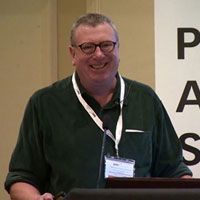
Martyn Hooper

Author Archive

Ninety Two Year Old and Still Suffering

by on May.24, 2011, under Pernicious Anaemia Society

Yesterday I received a telephone call from one of our oldest members.  Margaret is 92 years old and, to be honest, I would have thought her in her fifties.

Margaret called to ask if there was anything she could do to end the continual tiredness that she was experiencing.  I told her that, unfortunately, there was nothing I could suggest.  She then went on to tell me something quite unusual.  When she was diagnosed in the 1960′s she managed quite well on the monthly treatment regime that she was prescribed.  “In fact, I was doing so well that I asked by doctor if I could have the injection every two months as it meant taking a morning off work – but he refused and said I must have them monthly”.  Margaret remembered that, during the 1970′s she was told that she would only need the injection every two months – “and it was then that I remember feeling the need for the injection at the end of the two months.  Then they put me onto every three months which is just too long” she said.

We know that the British National Formulary changed the treatment regime from monthly to every two months in 1974 and then to every three months in 1984 – Margaret had lived through those changes.

“Mind you – I have a very good doctor” she said.  “He has allowed me to have the injection after only ten weeks, but I long for the days when I used to have it every month”

1 Comment more...

TELEPHONE CALLS

by on Feb.24, 2011, under Pernicious Anaemia Society

Every day, we get telephone calls to the office from people, mostly members, who are having problems getting diagnosed and treated according to their needs.

That there are serious issues surrounding the way in which Pernicious Anaemia is both diagnosed and treated are a given, something that is confirmed by the results of the online survey which is still being completed by new members.

Some of the telephone calls are very sad, and it often involves the person on the other end of the telephone feeling angry and resentful about the way in which they have been treated during the run up to the diagnosis.  By far the most common cause of complaint surround the issue of frequency of injections.  And there is a worrying trend that seems to be appearing when the GP stops treatment because the patient’s B12 levels are so high.

To amass even more evidence of poor treatment I will be recording the nature of the telephone enquiries and calls that we receive at the office.  All telephone calls are recorded by hand, but the content is not available to anyone.  So here you will be able to witness for yourself the nature of the calls we receive.  All times are a.m. – I get too tired to take calls in the afternoon.  I’ll start with yesterdays calls:

Wednesday, 23 Feb. 2011

10:30 am.  Telephone enquiry from Bill from Australia.  Bill wanted to know if the numbness in his feet might be to do with the Pernicious Anaemia that he had been diagnosed with.  Bill was seeing a Neurologist on Thursday.  I advised Bill to go to the website and to the Download section where he could download the leaflet on Sub-Acute Combined Degeneration of the Cord Secondary to Pernnicious Anaemia.  Bill apologised profusely for taking up my time.

11:40 am.  Vanessa from North Wales called. She was on three weekly injections of Hydroxocobalamin but her doctor has now reviewed her medication and has now told her that she must manage on a three monthly regime.  Vanessa was very upset and frightened as she feels her condition deteriorates rapidly after three weeks.  I advised Vanessa to contact her doctor again and request a gradual  change in her treatment.  Vanessa had been offered anti-depressants by her GP.  Vanessa then asked for the telephone number of anyone who would treat her in the private sector.  This I gave her.

Thursday 24th Feb, 2011

09:00  57yr old Femal ‘R’  phoned.  Her Grandmother had PA and was wheelchair bound.  She has all of the symptoms of PA but her B12 levels remain at 180 mcg/ml.  The threshold used by her laboratory is 160 mcg/ml.  Her doctor is monitoring her levels but she cannot concentrate, is unsteady on her feet and has no energy whatsoever.  She was advised that, if she started taking sub-lingual Methylcobalamin lozenges that she had heard about, then her B12 levels would rise and she would probably never get diagnosed.  She will think over the option of consulting a priavate doctor.  R is a musician.

09:52  52yr old Female ‘L’ phoned.  I have spoken to her before.  L had received the results of her blood test that showed her B12 levels were 2,000.  She was worried that this would damage her liver.  She wanted to know if she should stop her injections.  She was worried that, her nurse had told her her levels and then injected her with even more.  I told her that as far as I knew there was no risk of overdosing on B12 and that she should discuss her worries with her doctor.  L wanted to know more about the Infusions and if it was true that Lady Thatcher used to get injections regularly.  I told L that the society didn’t recommend infusions but we had a policy of informing our members of this alternative treatement.  After ten minutes on the phone L thanked me, apologised for taking up my time, and the conversation ended.

Friday 25th February:

12:40.  F is a 42 yr old Male who has all the symptoms of Pernicious Anaemia/B12 Deficiency.  F has not been able to work for ten years due to his health.  F is under the care of a Psychiatrist.  After a long battle his GP has finally diagnosed B12 Deficiency but will not investigate the cause of the deficiency.  F has been prescribed injections of B12 but is unwilling to participate in the treatment regime because he wants a definitive diagnosis.  F asked for advice.  I told him that I couldn’t give advice but told him that failing to treat the deficiency could result in permanent and irreversible nerve damage.  F was thinking of pursuing a negligence claim and again asked my advice.  I told him that I was not a lawyer and that he should seek legal advice.


Monday 28th February:

10:12.  A is a 69 yr old Female:  A telephoned to discuss her husbands predicament.  His doctor refuses to prescribe a more frequent injection than the one he receives every three months.  She has turned to the private sector and has sourced Methylcobalamin which she has been administering.  Her husband has shown slight improvement but she has now exhausted her supply of Methylcobalamin.  She asked for an alternative source as her original supplier was quite expensive.  I was unable to provide any alternative and I cautioned her against buying from the internet and that if she was going to buy any it should be from a registered doctor.

Wednesday 2nd March:

09:25  D is a 43 yr old Female.  D wanted to know why her father started to deteriorate one month after his injection.  I told her that this was quite common.  D wanted to know why her father’s GP “who is usually so kind and caring” would not allow her father more frequent injections.  I explained about the BNF guidelines and that some doctors were not prepared to deviate from them.  D was informed of the other alternative and supplementary sources of B12 that many of our members use.

Thursday 3rd March:

07:02  I received an email from a member who had joined yesterday but couldn’t access the website.  Jon, the webmaster, sent me an email stating that he had authorised her membership.  H is a 51 yr old Female who is extremely concerned about her 83 yr old father.  I telephoned her at 08:25.  H was in a highly charged emotional state.  She thanked me profusely for telephoning her.  She wanted to put me on speakerphone so that her husband could make notes – I agreed to this.  H’s father has all the symptoms of PA – tiredness, tinnitus, numb feet, balance problems, shortage of breath (sighing all the time and taking deep breaths).  His mother (H’s grandmother) also had PA.  H’s father has been diagnosed as having “non iron deficient anaemia” and he has been prescribed folic acid.  H’s father is deteriorating rapidly, to the extent that when a neighbour visited him a few days ago she telephoned the ambulance and he was admitted to hospital where all the tests carried out were inconclusieve.  “I know he has PA but nobody is listening to me” she said.  She asked where she could get help and I told her that, although the society doesn’t recommend the use of infusions, but we do have a policy that means we make our members aware of the alternative treatment, she might consider contacting a doctor with this in mind.  I gave her the telephone number of one such doctor who is just an hour away from her.  H is convinced her father is dying from PA and nobody is prepared to just try some B12.  This was quite a harrowing call from a very frustrated lady.

09:47   C is a 46yr old female.  C has most of the symptoms of PA.  Extreme tiredness, numbness, memory loss, struggling with words.  C’s grandmother had PA.  Although she has all the symptoms and is convinced she has PA her serum B12 levels remain just above normal levels.  She told me she had had three blood tests in the last six months but her GP rules out B12 Deficiency because her levels are above normal.  I suggested that she might try supplements of B12.  “Oh I already take those” she said.  “I’ve been taking them for two years”.  I advised that this is probably why her B12 levels are above the normal level.  The only alternative would be to stop taking the supplements, but that might lead to irreversible nerve damage.  A real dilemma.  I suggested she told her GP that she was taking supplements.


11:10  S is a 69 yr old female who has telephoned before.  S’s daughter is a doctor who injects herself every two weeks as she has B12 deficiency but has not been diagnosed with PA although she has all the symptoms.  S has been on monthly injections for six months as a trial.  On Wednesday she had seen her hospital consultant and she presented him with a letter from her daughter stating that S was doing well on the monthly injections and asked for them to be continued.  The consultant seemed annoyed by the letter and told S that there was no need for her to be on monthly injections and that she would go back to the three-monthly regime “just like the rest of my patients”.  I could do nothing but sympathise.


8/3/11

09:25  MP is a 72 yr old female.  MP’s sister has PA and when MP was in hospital for a hip operation she was identified as being B12 Deficient and then diagnosed as having PA.  She had been told by a friend that she should be taking Folic Acid.  I advised her to ask her Dr. to check her folate levels were fine.

10:05  KT is a 50 yr old who lives alone on a remote island.  She has all the symptoms of PA and her B12 levels were low.  However she was not treated after her last blood test and only after she had requested a copy of the results did she identify her low B12 levels.  She went to her GP and asked if he had missed something.  He admitted that she was low and she has been prescribed cyanocobalmin tablets.  KT reacts adversely to salt and sugar.  She has purchased some Methylcobalamin but has not yet injected because she is fearful that she might have a reaction as there is chloride in the injection.  As she is alone and vulnerable she is hesitant about treating herself.  She keeps lots of Cyanocobalamin injections for her farm animals but has not used this on herself.  I sent her our information pack and reassured her that she could telephone us at any time.

11:15 SP is a 66 yr old female who is struggling on her two monthly treatment regime.  She asked for the telephone number of a Dr. who carries out infusions.  SP was told of the society’s policy towards infusions and was then given the number of a Dr.

11:35  MH is a 50 yr old male who wanted to know if the lump he has developed in his throat could be attributable to PA.  I advised that only his Dr. could be of help but I know that Dr. C associates problems with swallowing with B12 Deficiency.

9/3/11

09:45  JH is a 59 yr old female.  JH wanted to know if there was anything that we had published that she could take along to her GP to try and convince her to allow her more frequent injections.  She was advised that all we had was the leaflet given out to new members.  This was sent to her.

11:00  DW is a fifty two year old Male who has been told he has severe Vitamin B12 Deficiency but whose GP doesn’t think it worth trying to find out why he is deficient as the treatment will be the same – replacement B12 therapy.  DW wanted to know if it was his right to receive a full diagnosis.  DW was told that this was quite common and the issue of him having a right to a diagnosis should be taken to the local health board.

10/3/11

09.20  MD is a forty yr old female who has just been diagnosed as having Pernicious Anaemia.  She had a copy of her blood tests and wanted my opinion on them.  I requested that she post these on the forum where the moderators were in a better position than me to advise her.

10:00  LW is a fifty year old female who has been diagnosed as having ME.  I had previously spoken to her mother in relation to her daughter who is 16 and shows all the signs of being B12 Deficient.  These are always the difficult cases and are always first referred to us by grandparents.  LW’s daughter is constantly tired, unable to concentrate and is becoming increasingly insular.  Her schoolwork is suffering and now is only taking two GCSEs insteaed of the eight that she originally began.   Her condition is deteriorating but just before Christmas her B12 level was 260 where the lower threshold for deficiency was 200.  I ran through a list of our symptoms from our symptoms list and the mother commented that, not only did they nearly all apply to her daughter, but applied to her as well.  She was also worried that her son, who is 14, is also starting to display the same symptoms and that she will be getting his blood tested as soon as she can.  LW wanted to know the telephone number of a private doctor and this she was given.1/3/11

09:45  DE is an eighty one year old male who has been having replacement B12 Therapy for over thirty years.  I fully expected him to tell me that his GP had now told him that he no longer needed the injections but DE simply asked for the telephone number of someone who would give him more frequent injections as he felt that he had suffered from under treatment for years and year.  He was given an alternative telephone number.

14/3/11  No Calls

15/3/11  No Calles

16/3/11  No Calls

17/3/11

10:45  JL is a middle aged female who has a family history of PA.  She is one of four children and the only one born without neural tube defects.  Two of her brothers died very soon after being born and one other brother lived until he was seven.  Her paternal Grandfather and maternal Grandmother all had Pernicious Anaemia.  She is extremely worried about her daughter who is displaying all the signs of PA – extreme tiredness, numbness in her feet and hands, extreme mood swings etc.  Her daughter who is 27 has had her blood tested but there is no macrocytosis and the doctor had to be harrassed into testing B12.  Her B12 levels have dropped from 280 to 240 in six months and she will not be tested again for another twelve months.  JL asked what she could do.  I suggested that she ask her GP to refer her to a private Haematologist or Neurologist but warned her that there was no guarantee that either of them would solve the problem.

15/3/11  09:00 – a ring back request.  DD is worried that her husband has been told he is deficient in Folic Acid.  She wanted to know what that meant.  I suggested she post on the forum.

18/3/11  Things are turning hectic here as we start to distribute information about the events coming up.

28/3/11  09:15  VC is a 47 year old lady phoned.  She has suffered a stroke, and she has survived a brain haemorrage.  She has been diagnosed as having Pernicious Anaemia since 1999 and has managed well on a three-weekly injection although she feels the need for another injection after two weeks.  Her doctor has told her that she no longer needs any B12 Injections and they have been stopped.  She wanted to know the contact details of a doctor in the private sector and was given this.

10:10  JG is a 67 yr old male who has just been diagnosed.  His GP gave him this society’s contact details.  He just wanted an explanation of what PA was.  He was told and an information leaflet as well as an application form to join the society was sent to him.

29/3/11

10:45  JC is a 47 yr old nurse.  Her B12 levels are 130mcg/ml yet she will not get treated until her levels fall below 100mcg/ml because “that is the policy in this area”.  JC is a nurse in another area where patients are treated when their levels fall below 180.  She has accessed the medical records of patients to confirm this.  She wanted the telephone number of a private doctor which was given.

11:25  AC is another 47 yr old nurse who has all the symptoms of PA, and her paternal Grandfather had PA.  Her serum B12 is 230  which rose to 243 at the last test.  She cannot think properly, is making mistakes in work, believes she shouldn’t be working, has nerve damage and balance problems and has severe fog days.  She is not being treated and wanted the name of a private doctor which she was given.


I’d forgotten I had this thread.    Or rather I yhave been so busy with the symposium.


2/9/11

It’s not even nine o’ clock and I’ve had two phone calls – both about the frequency of injections and both from members in their seventies – one man and one female.  Both had the same problem “I’ve been on monthly injections for forty years and now I have been told I can only have an injection every three months.  My doctor was so angry”.   Why?  Because my latest blood test showed my levels were high.


1 Comment more...

Symposium – June 9th 2011, Grand Pavilion, Porthcawl, South Wales, UK

by on Feb.24, 2011, under Pernicious Anaemia Society

The Symposium is definitely going ahead.  Yesterday, as I was leaving the office, I checked the postbox.  There was a letter from the Big Lottery.  I removed the letter from the box and went back upstairs to the office.  I placed the letter on my desk and told Miranda and Olivia that it was either a rejection or notification that I had been successful in the application for nearly £5,000 – the cost of hosting the symposium.  Both Olivia and Mirand believed the letter was a successful notification.  It was.  And so things will definitely go ahead.

The following people have all confirmed their attendance and will be presenting papers relating to their latest research findings into Pernicious Anaemia and/or B12 Deficiency.  I don’t yet have the titles of the papers but the following have confirmed their attendance:

Professor John Hunter – Professor of Medicine, University of Cranfield, Honorary Physician, Addenbrooke’s Hospital, Cambridge.

Professor Helga Refsum – University of Oslo & Visiting Professor or Nutrition, University of Oxford

Professor David Smith – Professor of Ageing Medicine, University of Oxford

Professor John Scott – Professor of Molecular Medicine, Trinity College Dublin

Dr. Anne Malloy, Clinical Lead, Vitamin Research Group, Institute of Molecular Medicine, Trinity College Dublin

Dr. Joseph Chandy, GP, Shinwell Medical Centre

Now begins the organisation.  The intended audience will be made up of medical practitioners from either primary or secondary care.  More of this as it develops.

2 Comments more...

Is B12 a Performance Enhancing Drug?

by on Feb.20, 2011, under Pernicious Anaemia Society

Anyone on B12?

I had a really unusual telephone call last week.  It was someone from UK Athletics.  He wanted to know whether an athlete who took B12 could be considered to be taking an performance enhancing drug.

“It’s an interesting question” I replied

“I know it is” he said.

“I know they give it to horses and Greyhounds before races” I offered.

“But does it work?” he asked

“I honestly don’t know”

“Can it be obtained easily?”

“Oh yes – very easily”

“But I thought it was only available on prescription”

“It is in the UK – but freely available over the counter on the continent”

“So is it classed as a drug” the man asked – clearly getting confused.

“It’s a vitamin” I said.

He then thanked me for my time and hung up.  I cannot but help thinking that somewhere, some athlete has been bragging that injecting B12 makes him or her perform better.  This could be the beginning of a whole new debate into the use of B12 as a performance enhancing drug.

1 Comment more...

The Symposium And Documentary Premiere

by on Jan.25, 2011, under Pernicious Anaemia Society

The Documentary that has been nine months in the making will be premiered on the same day of the Symposium.

The Date is Thursday June 9th.  I am busy trying to secure a grant that will cover the cost of hosting the event (around £4,500) and the venue will be determined by whether or not the grant application is successful.  If it is successful the event will be held in Wales, if not then we will be seeking sponsorship to host the event in London.

The Documentary – Living In The Fog - will be shown at the event and so the venue will probably be a cinema.

Speakers who are confirmed attendees at the Symposium are:

Professor David Smith – Professor of Ageing Medicine, University of Oxford.

Professor Helga Refsum – Professor of Nutrition, University of Oslo, Visiting Professor of Nutrition, University of Oxford.

Dr. Edward Valente – Marketing Manager, Axis-Shield Diagnostics.

Dr. Fiona Porter-Smith – a General Practitioner and member of the society who devised and analysed our survey.  I may have to present these findings as Fiona is due to give birth just before the event!

I am still waiting to hear back from two other speakers who will  almost certainly be present.

The idea behind the symposium is to bring together doctors who are aware of the serious issues relating to the diagnosis and treatment of Pernicious Anaemia in particular and B12 Deficiency in general.  We, as a society, are aware of these issues, as are some notable doctors.  Yet nowhere is this information being widely disseminated throughout the medical profession.  The hardest bit will be getting doctors who are, as yet, completely unaware of these serious issues to attend.

If you are considering attending the event please be aware that the content of the papers (with the exception of me or Fiona’s) will be highly technical and based on complex science.  The Documentary will be easy to understand though.  Please call the office if you are interested in attending.

More of this as it develops…..

Leave a Comment more...

The Most Confusing Telephone Enquiry Yet

by on Jan.25, 2011, under Pernicious Anaemia Society

A lady telephoned the office yesterday asking for some advice.  The call was transferred to me.  I was aware that doctors are reluctant to prescribe B12 for whatever reason, but this latest call drove home to me the magnitude of the problem that we face.  The conversation went like this:

Me – “How can I help”

Caller “I’d like some advice please”

“Certainly, but I have to advise you that I am not medically qualified and your doctor is the best person to advise you of any medical matter”

“That’s the problem”

“Okay – go ahead”

“Well, my doctor has run all kinds of antibody tests on me and I have tested positive for Intrisic Factor Antibody”

“So you have Pernicious Anaemia!”

“Well, I have all of the symptoms on your checklist apart from one”

“Then you have Pernicious Anaemia”

“But my doctor won’t diagnose me with having it – even though My Great Grandmother died from it”

“Why won’t your doctor diagnose Pernicious Anaemia?”

“Because she doesn’t trust the test and thinks it might be a mistake”

“So what has she diagnosed”

“Depression”

“Let me get this right – you have nearly all of the symptoms, you have a family history and you tested positive for the Intrinsic Factor Antibody?”

“Yes – that’s correct”

“And your doctor thinks you are depressed?”

“Yes – she wanted to prescribe me anti-depressants but I refused.  I’m not depressed, but I have no energy, can’t think clearly, have memory problems and have pins and needles and numbness in my legs and feet – I don’t know what to do.”

“What is your doctor going to do next?”

“Order the Intrinsic Factor Antibody test again to rule out Pernicious Anaemia.”

“That test is around 40% accurate and so there is the chance that the test will come back negative”

“I know – what can I do?”

“The only thing I can advise you to do is ask to be seen by another doctor”

“I thought that was what you would advise”

I ended the call and shook my head.  This is, after all, a harmless vitamin.

1 Comment more...

The Staring Man

by on Jan.09, 2011, under Other, Personal

This is a true story that happened just after Christmas 2010.

I had taken a seasonal job delivering ‘Meals on Wheels’ to elderly housebound people in the mountainous area to the north of Cardiff in Wales.  The service is provided by the local authority who charge a minimum amount for a two course hot meal that is delivered using a fleet of small vans.  In the winter Meals on Wheels is especially useful as not only does it guarantee that the most vulnerable in the community receive a well balanced hot meal, but it also means that the customers also have a visitor who might be their only human contact every day who is able to identify any problems encountered by the client and relay that information to social services.  It’s a valuable service.

The vans that are used to deliver the Meals on Wheels are not especially adapted for their purpose.  The food is kept hot using thick, insulating boxes.  If the food is loaded onto the van at 10:30 in the morning it is still piping hot at 3 in the afternoon when the last deliveries take place.  The insulating boxes just sit on the floor of the loading area and are stacked up.  The winter of 2010 has been the coldest for decades with widespread snow disruption.  This has meant that the vans that are normally used have had to be replaced by four-wheel drive vehicles that are driven by their owners who volunteer their services free of charge although they do get remunerated for the fuel used.  Using the volunteer drivers over snow covered roads means that the delivery time is longer than usual, but it ensures that the service is kept running.

It was a bitterly cold Wednesday that saw me struggling to drive to the Community Centre that acted as the depot where the meals are prepared.  I skidded and slid all the way to the village that housed the community centre and arrived ten minutes later than I was supposed to, even though I had left my house twenty minutes earlier than usual, allowing extra time for the journey because of the snow.  Some of my fellow workers had not managed to get to the centre and so my lateness was completely overlooked and the supervisor was genuinely glad to see me.

“You’ll be working with Annette and Josh today” she told me, adding “Josh is a volunteer 4×4 driver – that’s him over there with Annette”.

I walked over to where Annette was chatting to a tall, well-built black man.  Annette acknowledged me and broke off her conversation with Josh.

“I didn’t think you would make it” she said.

“I nearly didn’t” I replied.

“Martyn, this is Josh who is driving us today”  John smiled revealing a set of pristine white teeth. He offered his hand and I took it.  It completely covered my hand – his hands were as big as shovels. He was tall and well-built with broad shoulders and a large chest – the results no doubt of having done many years of hard manual work with his two shovels.

“Pleased to meet you” he said cheerfully.

“I’m pleased to meet you too” I replied.  Turning to Annette I asked how many deliveries we would be making.

“Twenty two – we’ve had a lot of telephone cancellations – they didn’t want us to injure ourselves delivering their meals” she said, to both Josh and me.  “We are just waiting for three more dinners to be plated and then we can finish loading and start”.

“This is going to be fun” I said.  Josh laughed and agreed with me.  Annette placed the last few dinners into the Land Rover.  I climbed into the back of the vehicle where a bench type seat ran the length of the loading area.  There was no seat belt.  This was an old vehicle.  At my feet were the boxes of hot food that filled the Land Rover with the aroma of roast lamb and vegetables.  The windows began to steam up.

All was going well.  Josh certainly knew how to drive in snow and ice and, apart from one small skid, he negotiated the steep hills and sharp bends admirably.  We delivered the last of the meals just before 2:pm and we headed back to the depot.  Snow lay everywhere, and the route that we took back was picturesque as the sun glimmered on the white blanket.  We turned off the main road and headed down a lane that would save ten minutes on our journey.  As we gingerly made our way between high hedges we noticed a farm tractor ahead that had stopped next to a gate and the farmer was offloading bales of hay for the sheep that were in the field.  We couldn’t pass the tractor as it was a narrow lane and the farmer hadn’t pulled into the little recess just in front of the gate.  The atmosphere inside the Land Rover suddenly changed and Josh turned very angry.

“Why oh why here of all places” he shouted, startling both Annette and me.  “I hate this lane, and I hate this gate – why didn’t he pull in?  How long are we going to stuck here – here of all the places to have to stop?”  He suddenly leaned across Annette and locked her door before quickly locking his at the same time as he brought the vehicle to a halt.  He stared ahead.  “Look” he said as he held out his arm and rolled up his sleeve.  I couldn’t believe it.  The thick hair on his arm were standing completely upright.  His eyes were wide open and darting from side to side.

“What is it Josh?” Annette asked.

“I can’t tell you now” he answered in a voice full of panic. His shoulders were haunched, his breathinng was shallow and rapid.  He was extremely tense and nervous. This was a different man to the one who had been so cheerful a minute earlier.

The vehicle fell silent whilst Josh twisted and squirmed in his seat.  “I hate this place” he shouted, then kept repeating in a lower voice to himself “I hate this place, why here, I hate this bloody place”.

It seemed like an hour but in reality no more than four minutes had passed when the farmer closed the gate, waved at us, and got back in the tractor.  We followed the tractor out of the lane and back onto the main road where he pulled in to the side to let us pass.  Josh let out a huge sigh and we both noticed that his shoulders relaxed and he started breathing normally.

“I’m sorry” he said as we got out of the Land Rover and walked into the depot.  Both Annette and I mumbled something about it not mattering.  Josh hadn’t said another word on the way back to the depot.  This is the first time he had spoken since the incident with the tractor.  “Sit there and I’ll get you a mug of tea” Annette told him, and Josh walked slowly to the table Annette had pointed to.

“What the hell was that all about” I said to Annette as we waited to be served.

“I don’t know but he was absolutely terrified” she replied.  “I have never seen anyone behave like that before” she added.

We carried three mugs of hot tea to the table that Josh was sitting at alone.

“You deserve an explanation” he said, staring into the mug.  Neither Annette or I said anything.  We certainly didn’t argue with his statement as we both wanted to know what had happened to turn this pleasant, easy-going man into a frightened and unpredictable neurotic.  We waited whilst Josh continued to regain his composure.  He shuffled uneasily in the chair and, without looking at either of us related the events of ten years earlier that had been the reason for his sudden change in behaviour.

“It was just after Christmas ten years ago” he began.  “The 27th of December 1999 – four days before the new Millennium.  It was a Monday and it was a beautiful clear night at seven o’clock.  I was driving home after taking my mother shopping in Cardiff in the winter sales.  It was the day after boxing day”.  His voice started to tremble but he checked himself, took a deep breath, sipped is hot tea and carried on, in a slow determined manner.

“I had had two mugs of tea with my mother and was driving home through that lane – the one we were stuck in.  I needed to take a pee really badly but thought I would make it to the pub just opposite where we left the lane and re-joined the main road.  I soon became obvious that I needed to go before then and so I pulled into the little recess where the gate was.  The gate that the farmer emerged from”  He paused, and for the first time looked up at Annette and I before returning to stare at the table.  He took another sip of tea and continued.

“I went through the gate which was closed but not locked, walked a few paces behind the hedge so nobody could see me from the lane – although there was no traffic around – and did what I had to do.  I closed the gate as I strolled back to my car and suddenly felt uneasy.  I looked to my left and there, in the passenger seat, was a man.  A thin white-haired man in an old black jacket who just stared at me.  He just stared.  Didn’t say a word – just stared”.  Josh’s eyes were wide open and his shoulders were once again haunched.  “I know this sound crazy but he was talking to me just by staring.  He was saying ‘just drive, just drive, don’t ask questions just drive’. I drove.  Oh yes – I drove like a madman.  I didn’t care for danger – I just wanted to be with other people.  I wanted to drive as fast as I could to the pub at the end of the lane.  In less than five minutes I was screeching to a halt in the pub car park.  The windows of the bar had no curtains and so quickly did I drive into that car park that a couple of regulars at the bar looked out of the window to see what the comotion was outside.  I got out of the car as quickly as possible.  I was away from the glaring man.  I was so relieved.  I wanted to confront him, ask him what he thought he was doing.  My heart was pounding, my legs were weak but I was going to scare the life out of that mererable creep just as he had frightened me.  I waited for him to get out.  He didn’t.  I bent down to the driver’s window to tell him to leave my car.

There was nobody in there.  The car was empty.  The staring man had gone.

“That is so creepy”! blurted Annette.  “Oh my God- that is so creepy” she went on.  “No wonder you were spooked”.

Josh said nothing but stared at the table as he drank his tea.

“Oh well, we’d better be starting for home” I said.  Annette started to put her coat on then Josh said “There’s more”.  Annette sat back down at the same time as me.  We watched Josh.  Josh talked a little quicker.

“I was so astounded that I went into the pub and ordered a whisky.  I took it to the table nearest the fire and stared into the fire.  Had I imagined it?  No way.  Had I been dreaming?  No way.  I tell you that man with the stare that could speak was in my car.  How he had got out I didn’t know.  I wanted to go home as fast as I could then.  I downed the whisky and headed for the door.  As I was passing the bar a man came in through the door in a terrible state.  He blurted out to the men at the bar - “I’ve just run over a woman.  She went right over the roof of the car”.

The men at the bar immediately stood upright.  One of them said “Where is she now?”

“I don’t know”.

“What do you mean you don’t know?  Did you stop?”

“Of course I stopped.”

“Is she hurt” demanded one of the men.

“I don’t know.”

“What do you mean you don’t know?”

“I stopped the car and got out to help her – but there was nobody there”.

The bar went silent.  The landlord spoke.  “Did she run out of a field through a gate?”

The man looked stunned.

“Yes – but the gate was shut”.

4 Comments more...

Review of 2010

by on Dec.22, 2010, under Pernicious Anaemia Society

The past year has seen the society making steady progress towards its medium term aim of getting medical professionals from all over the world to call for a comprehensive Review of the way in which Pernicious Anaemia is Diagnosed and Treated.  The progress is slow, but steady.  And you have to realise that this is an enormous learning curve for everyone involved – including those members who are medical professionals themselves.

Before describing the progress that we have made, I will turn my attention to

The New Office Suite

some of the other main events and achievements that we have made as a charity.

OFFICE. The first big change that has happened over the last year was the move from a small office where we paid £580 per month in rent to an enormous new office suite that comes free of all rent – although we do have to pay for electricity.  The fact is that the landlord of the office has to pay quite considerable business rates to the local authority, even though the office is vacant.  By allowing a registered charity to occupy the space free of charge the business rate is automatically reduced by 90% with a further 10% reduction at the discretion of the local authority.  The large office space has provided us with an opportunity to host seminars and tutorials that would typically have meant us paying hundreds of pounds to hire suitably sized premises.  The office comes complete with kitchen so that catering costs can be slashed as well.
Two meetings of the south Wales support group have already taken place and more are planned in the near future.  It was hoped that the proposed Symposium that will take place on Thursday June 9th 2011 would take place in the office.  However, early idications are that the number of attendees might well exceed the 200 mark which would stretch even our available space.  More of this in the future.

VOLUNTEERS. The society is very lucky to have the support of a band of volunteers who help run the society by performing various administrative tasks, ensuring that all legal requirements of the UK Charity Commission are met, responding to requests for information, organising local support groups and a host of other duties that are carried out with enthusiasm and with a genuine desire to make the society work as well as it can.  The relationship between the society and its volunteers is mutually beneficial.  The charity receives welcome support for only the smallest outlay – we do pay travel expenses – whilst the volunteers get either valuable work experience or a pleasant environment where they can interact with others and use their experiences of past working lives to better the society.  Sometimes it’s a combination of the both.  The society has become well known for its ability to produce volunteers who have developed highly transferable and valuable skills that provide the stepping-stone into full time employment.  Indeed, in the last newsletter of the Welsh Council for Voluntary Organisations, we were singled out as being an exceptional volunteer run body.  In the last eighteen months, nine of our volunteers have found full-time work.  Our volunteer turnover may be high, but it’s for the right reasons.

EMPLOYEES. This year we have been able to offer two volunteers six months full time employment under the Welsh Assembly Government’s Future Jobs Fund.  Basically we have a Service Level Agreement with the Welsh Council for Voluntary Action whereby the WCVA provide us with the money to employ an unemployed 18-24yr old for six months.  We are responsible for all supervisory actions and for paying the employee.  Kirsty was the first employee who, following on from six months volunteering, was appointed in January of this year.  Kirsty’s contract ended in June and we were delighted when she was successful in applying for an administrative position in the private sector.  Kim was appointed in March and set to work to use her skills developed during her degree course to produce a documentary on the problems with the symptoms, diagnosis and treatment of Pernicious Anaemia.  Kim’s contract ended in September but she continues to work on the documentary on a voluntary basis.  We have a vacancy advertised for another employee but, so far, we have not found anyone suitable to fill the post.  None of our current volunteers qualifies under the Future Jobs Fund criteria.

The 2010 Spring Conference

EVENTS. The year began with another Spring Conference at Bryngarw House near Bridgend, south Wales.  The much loved Dr. Chandy gave another enthusiastic lecture on b12, along with Eddie Valente of Axis Sheild Diagnostics and Dr. Siddarth Banka who updated us on his research into the genetics of Pernicious Anaemia.  The conference allowed members to speak to other members and also to contribute to the letter that was being prepared to alert the Department of Health to the problems with the diagnosis and treatment of Pernicious Anaemia.

The planned Symposium will be the focus for the society in 2011.

Another development was the formation of local support groups. While some groups have become quite successful others are struggling to recruit members even though some of these areas have large numbers of people who are members locally.  This is an area that will continue to develop in 2011.  If anyone would like to start a support group in their area please contact the office so that we can help.

INCORPORATION. The Trustees of the society, who continue to allow me to use executive powers in all matters relating to the society for which I am extremely grateful and acknowledge their trust, have taken the decision to incorporate the society into a limited company.  This process is now underway and should be completed by early Spring.  This will mean that we will have a new charity number and the liability of all trustees will be limited to £1.  The Trustees met twice this year and continue to support all events that have taken place.

MANAGEMENT COUNCIL. The management council continues to meet every six weeks online using Skype.  The council is made up of the following personnel:  Pat Kornic – Canada, Ian McClean – U.S.A., David Connell-Smith – U.K. (and a Trustee), Alex Black – U.K. (and a Trustee), Norman Thomas – U.K. (and a Trustee), Tuula Siljander – Finland, Corrine Day – U.S.A.  Oh, and me.

NICE. The National Institute for Health and Clinical Excellence (which, in the UK is responsible for ensuring the introduction and monitoring of best practice in all things health) turned down three requests for different reviews into the efficacy of treatment, diagnosis and symptoms.  When contacted by Kim to give an interview to camera (see ‘Documentary’ below) they instead issued a statement that said that the requests were taken seriously but when they had contacted the Royal College of Pathologists, they had been told that there were “no issues relating to the diagnosis or treatment of Pernicious Anaemia”.  I have since written to the President of the Royal College who has passed my request for an interview to his colleague – the immediate past president.

THE VISITOR. I have to be careful here, because I know this person reads my blogs.  In May of this year, I received an email from the personal assistant of the Deputy Chief Medical Officer for Wales who was also the Medical Director of the NHS in Wales asking for a meeting at the society’s office.  I replied that, as the Doctor’s time was more valuable than mine that I might travel to Cardiff to meet with him at the Welsh Assembly Government Offices where he was based.  The return email stated that Dr. Hunter would prefer to come to Bridgend.  The time and date was set and, cometh the hour, into the office walked Dr. Hunter waving his arms around as he took in the vastness of the office.  I began to explain why we had such a large office and he stopped me telling me he knew the background – he had been reading my blogs……  I then asked if he wanted to know some of the problems with the diagnosis and treatment of Pernicious Anaemia but he replied that he didn’t need to be briefed as he had been reading the forum posts and was astonished that such problems existed.  He assured me that he would be bringing this to the attention of NICE in the future.  We have yet to hear from NICE but the visit proved that what we are doing, as a society, is worthwhile.  We have, at least, one seniour medical professional who is aware of our plight.  The visit was a significant milestone in the society’s history.

THE DOCUMENTARY. Where do I start?

This Could Change Everything

During the Summer one of our employees suggested that the society’s work would benefit enormously from having a documentary being made into all of the problems faced by our members.  Before June I had barely heard of High Definition, and was blissfully ignorant of the role of a Sony Z1 High Definition Video Camera  – that has now changed and for the last six months that camera has dominated my life as nothing has before.  The work that Kim has done in writing the script, arranging interviews, conducting the interviews and capturing the film (don’t ask – it’s complicated) is quite inspiring.  This has resulting in us, and other volunteers, travelling throughout the UK to interview and film senior, and world renown medical professionals and other scientists.  The result is a balanced analysis of the problems faced by our members that, in most cases, illustrates that these issues are causing unecessary suffering and urgently need to be addressed.  The film includes some very important and distinguished professionals seriously criticising the current tests used to diagnose B12 Deficiency and Pernicious Anaemia.  And these professionals have stated these criticisms to film and in quite forthright language.   However, just as important are the senior doctors, senior and internationally well-known doctors, stating that there is absolutely nothing wrong with the way in which Pernicious Anaemia and B12 Deficiency is diagnosed and treated.  The original budget for producing the film was £1,200 that was funded by a ‘restricted grant’.  In true Hollywood fashion, the film is four five times over budget but will be worth it.  We have one more interview to conduct on January 4th in north Wales and then it will be the start of the editing.  We have over thirty hours of film that has to be condensed into one hour and ten minutes. Kim is already exploring how the film will be distributed and it is hoped that it will be broadcast by one of the national broadcast channels.  It will also be available to watch on YouTube but all of this will depend on the Distribution terms and conditions.  It is hoped that it will be premiered in London, although we are still searching for a sponsor for the event that will cost around £5,000.  It will certainly be shown at the Symposium in June.

SUMMARY. This year we have concentrated our efforts on raising awareness among medical professionals of the problems we face.  In this we have had moderate success.  My thanks to all our volunteers including the Management Council and Trustees who have helped make this possible.  Next year sees the Welsh Assembly Elections which will provide an opportunity for us to be listened to by politicians.  But it will be the documentary and the symposium that will be the main events.  Finally, thank you to all our members who have continued to support the work of the society.  I wish you all a happy new year.


Leave a Comment more...

The Things They Say About Pernicious Anaemia

by on Dec.19, 2010, under Pernicious Anaemia Society

As you are probably aware, over the last nine months I have been concentrating on collecting evidence that will prove that there are serious issues surrounding the Diagnosis and Treatment of Pernicious Anaemia.  A quick visit to the Forum of the society’s website proves that these serious issues exist, but as medical professionals are not going to take the posts of members as hard evidence I set up an online Survey using Surveymonkey.  A GP who is a member of the society and sufferer devised the survey and is now analysing the results.  Nearly 420 members have completed it and it is revealing some frightening statistics.  Nearly 64% of Respondents reported that they waited over two years to be correctly diagnosed with 55% of members having been diagnosed with some other medical condition before finally being told they had Pernicious Anaemia.  Another source of evidence will be the documentary which will highlight the contradictions and anomalies of the diagnosis and treatment of Pernicious Anaemia – what has been captured on film is a level of misunderstanding among medical professionals that will cause many jaws to drop.

There is a question on the Survey that asks respondents to divulge what they were originally diagnosed as having if their correct diagnosis was delayed.  By far the most common misdiagnosis was ‘Depression’ but there have been some very exotic diagnoses as well.  Some of these are quite funny – or rather they would be funny if you can forget that the patient would be suffering needlessly when he or she received the wrong diagnosis.  Here are a sample of what our members were told:

“I don’t think you are mad or anything – but I think it’s your mood”

“It’s probably the menopause” – the member was only 32 .

“Pre Menstrual Tension”

“It’s all in your head” – this is a common one as well.

“Probably an alergy to the air”

“Variety of symptoms unexplained over time, except for my peripheral neuropathy which was attributed to my (perfectly good) shoes – at this point I went privately to a neurologist. Eventually B12 measured: 62!”

“Hypochondria”

“Probably a virus”

“Alcoholism”

“Psychosomatic Oral Dysesthesia”

“Emotional Problems”

” Depression, and or , being female”

“A stomach bug and later, depression”

“Fungal infection of tongue – instead of geographic tongue due to B12 def”

“Thought it could be MS, ruled that out with MRI scan -and then told me it was all in my mind!”

“Allergies, Asthma”

“Vertigo/Depression/PolyCystic Ovary Syndrome/Vitamin D Deficiency/Hypochondria (I think that’s about all of the screwy things I was told, but I might have forgotten some)”

And my own particular favourite:

“over 40 and a female – I was going to feel tried!”

As I said previously – these would be funny if they weren’t true and didn’t cause unnecessary suffering.
They keep on coming:

“The problem is that the more B12 you have the more you will want: It’s like heroin.”  Practice Manager to a patient yesterday.

“Some people get high on too much B12″ – GP to a patient a few days ago.

2/9/11.   “You’ll develop nerve problems if you have too much B12″

2 Comments more...

Why Pernicious Anaemia is still Pernicious.

by on Dec.19, 2010, under Pernicious Anaemia Society

Take a look at this link: (you may have to copy it to a new tab)

Hydroxocobalamin

http://www.wolframalpha.com/input/?i=pernicious+anaemia+united+kingdom

Now I’m not sure how accurate those figures are, but even if they are only half accurate, no, let’s go further, if they are only 25% accurate it still means that, worldwide, around 30,000 people die each year from a disease that is, supposedly, easily diagnosed and treated.  If we apply the 25% accurate rule to the U.K. around 80 people lose their lives every year to the same easily diagnosed and treated disease.  These figures are in themselves a disgrace yet go only a little way to exposing the true horror of the end result of a mistaken diagnosis and lack of treatment.  Can you imagine what that death would have been like?  Years and years of unnecessary suffering before, most probably, a heart attack finally causes death with the patient’s heart not being able to cope with the burden of frantically pumping blood in an effort to deliver rare or non-existent oxygen to where it is desperately needed.  Can you imagine the constant confusion and inability to concentrate on anything but the most basic tasks – the fight to find the right words, the doctor telling the family that the patient’s blood is fine and that it might be that the sick person is imagining it all?  It would be a long drawn out death after years of suffering – needlessly.

When I first started a service that would provide newly diagnosed patients with a simple, easy to understand explanation of their condition, I never imagined that I would be embarking on a journey that would uncover serious shortcomings in the way in which Pernicious Anaemia is diagnosed and treated.  When the first online forum went live, the first sign-up was a lady from the U.S.A. who, like me, had developed neurological damage because she had been undiagnosed for so long.  I thought, at the time, that this was a quite amazing coincidence that the first sign-up had undergone a similar experience in getting diagnosed as I had.  My suspicions were raised when the next two sign-ups also had been through a lengthy process before being diagnosed although neither had been undiagnosed long enough to have developed neurological problems as well.

Over the years the remit of the society has changed dramatically.  When I was eventually diagnosed as having Sub-Acute Combined Degeneration of the Cord Secondary to Pernicious Anaemia I remember asking the doctor to write down what I had.  I knew that the word ‘Pernicious’ was not a pleasant adjective but when I looked it up in a dictionary at home, I was a little startled to read that it meant ‘Ruinous, Destructive, Fatal’. I was assured by the GP at a future visit (one of many until I received treatment that suited me and not a textbook) that the disease used to be fatal, but could now be easily treated.  Note the word treated and not cured.  I remember trying to find out more about the condition and so I trawled the Internet (no easy explanation there), consulted medical dictionaries (either far too vague or incredibly complicated) and asked anyone who might know about the disease including Biology Lecturers in the college I was teaching at – very superficial explanations there.  And so my research proved futile and, when I had to take early retirement, I decided to dedicate some of my, what had become considerable free time to providing other sufferers with an easy to understand explanation.  I still have the original down-loadable information leaflet which is basic but easy to understand.  It was written at a time when I was still unaware of the enormity of the problems with the diagnosis and treatment of the condition.

The forum was proving to be incredibly popular and demonstrated quite clearly that there were serious issues relating to the Diagnosis and Treatment of the condition was now unquestionable – and it was a world-wide phenomena.  When visitor numbers to the forum, and the content of the forum postings  pointed to the need for a more robust and substantial society that could act as the voice of sufferers of Pernicious Anaemia I decided to form a society that would be a bona fide charity.    To do this I needed volunteers who would become Trustees of the society and so I posted a request that anyone who would be interested in taking the society forward to contact me.  Six members of the forum volunteered and we had our first meeting in Birmingham in early 2006.  This was the first time that I had spoken in person to other sufferers of PA and it was such a relief to know that what I had and was experiencing other people had and were going through the same problems.  By August 2006 the Pernicious Anaemia Society had been entered on the register of the UK’s Charity Commission with the registration number 1115195.

The remit of the new charity was quite simply to articulate the problems with the diagnosis and treatment of Pernicious Anaemia to the relevant medical and political authorities.  The charity’s remit had now changed from simply providing an easy to understand explanation of the illness to fellow sufferers to informing those who were able to bring about change about the problems associated with the condition.  By now I was fully confident that the decades of misdiagnosis and inadequate treatment would soon be ended as all that needed to be done was to bring these problems to the attention of medical professionals and politicians responsible for health.  The idea was that once the way in which Pernicious Anaemia was diagnosed and treated was changed in the UK, that would have a domino effect in all the other countries where the society had members.  I was convinced that, now we were a charity, those responsible for health-care in the U.K. would listen to our concerns and act immediately to rectify the situation.  With hindsight I was hopelessly naive.

Last year (2009) the society concentrated on lobbying politicians to commission a review of the way in which Pernicious Anaemia is diagnosed and treated.  We had moderate success in collecting 88 signatures to an Early Day Motion that was tabled in the House of Commons.  88 signatures was quite an achievement but it all came to nothing.  Madeleine Moon M.P. (the M.P. for Bridgend where the society is based) secured an adjournment debate where the only other person in the chamber was Ann Keen, the minister for health.  The reply from the minister was obviously written by a civil servant as were the replies that I received in response to letters written to Ann Keen and the then Secretary of State for Health.  It then dawned on me that even if the Minister asked for advice on this matter then the medically trained civil servants responsible for advising ministers were genuinely unaware that there are serious problems with the way in which Pernicious Anaemia is diagnosed and treated.  This year I have concentrated on compiling evidence to support the society’s claims.  This evidence is in the form of a documentary and survey.  The results of both the documentary and the survey provide hard evidence that there are problems and are quite truly remarkable.

People still die from Pernicious Anaemia – nearly sixty years after B12 was made available as a treatment (though not a cure) for Pernicious Anaemia.   It was reported in the New York Times a few years back that a lady who had been a key member of the New York  Opera wardrobe department (she was in charge of wigs) had died at her home in Scotland where she had returned to retire.  I wrote to the Minister for Health for Scotland asking for more information.  I received a reply that she couldn’t provide me with any more information “owing to the Freedom of Information Act”.

Ends

Leave a Comment more...

Looking for something?

Use the form below to search the site:

Still not finding what you're looking for? Drop a comment on a post or contact us so we can take care of it!

Visit our friends!

A few highly recommended friends...