The next few weeks are going to be a busy time for the society and for me. We have been able to convince the Big Lottery that we need a new website that will be responsive to our members needs. The new website is now being developed and will take a month to complete. However, before the new website starts to be built a lot of work has already gone into ensuring that the website content reflects the needs of our members.
Here’s how the whole process took place.
Firstly we had to write a bid for the grant. This involved producing evidence that there was a need for a new website. The Big Lottery insisted that we prove that the current website needed updating. This involved analysing statistics relating to the number of people visiting the site (a daily average of 575) and the amount of time people stay on the site (average time spent on the site 2 minutes 41 seconds) and how many pages are visited (3.12). Then we could provide details of new
versus returning visitors and other statistical data. Then we had to convince the lottery funders that our members, and the medical professionals would benefit from a more modern and up to date website. The current website was designed and built (for free) by a software engineer and not a web designer. But it has served its purpose for six years but is now groaning under the demands made of it and needs more modern features.
A New Brand
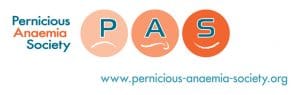
The Old Logo Reflects Our Original Aim
We were successful in our bid for a grant and now the detailed work
begins. It was suggested by one of our volunteers that we take this opportunity to not only develop a new website but also to re-brand the society. But why? Well first of all I had to be convinced that we needed to re-brand our image. And to do this the we had to conduct a poll of members asking what they thought of our current logo and branding. I say “we” though I had nothing to do with this. The results of the poll were given to me and it showed that whilst around 40% of our members thought the current logo and branding was a good reflection of our values, around 60% thought we would benefit from a new brand image. Something more “modern” that would reflect the new values and aims of the society. The original brand image and logo were developed free of charge by the partner of one of the original Trustees and at the time was aimed at the society simply providing “advice and support”. That’s what we originally set out to do. It was only after a few years that we, as a society, realised that there were serious problems and issues with the way in which B12 Deficiency in general, and Pernicious Anaemia in particular was being diagnosed. And secondary to that we became aware that there were serious problems with the way B12 Deficiency in general and Pernicious Anaemia in particular was being treated. We soon realised that we had a lot of work to do to raise awareness of these issues and convince medical professionals that these issues were having a serious impact on the everyday lives of our members. So, the original remit of the society had changed and now, in 2013, the fight goes on. And we need a new logo to reflect this change.
Re-Branding and the New Logo
“My uncle asked me what I wanted for my birthday” said Jo quite casually one morning. Jo is a volunteer who has been with us for around six months. I asked what she had asked for. “A new logo for the society” she replied adding, “He’s a Graphic Designer”. And so it was that we started on the quest for a new logo. We had already established that most, though not all of members who had taken part in the poll believed that a new logo would better represent our aims and objectives and now we had, as a birthday present, the offer from a Graphic Designer to design a new logo. But what would the new logo seek to convey. And this is where we begin to use members as Focus Groups. Starting with a brainstorming session at the office, we came up with a list of adjectives that would best describe our work and how we would like to be regarded. Reliable, Trustworthy, Knowledgeable, Honest and Serious were among the most common words that reflected the work of the society. These words would form the basis of the new brand and logo and they were given to the graphic designer. We waited. Seven days later the draft designs arrived. And now began the process of selecting which of the new logos would become our new brand ambassador. Again, it wasn’t a case of choosing “the nicest” but rather gathering a group of people together and asking them to identify which of the new logos best represented the list of key words that reflected the work and image of the society. First of all two groups of members and volunteers were shown flash cards of the new logos. The group members were then asked to make their choice. This first choice would be mainly based on first impressions where colour and graphic impact would be most likely to influence choice rather than a more in-depth consideration of the key words. Once the group members had made their choice each logo was then discussed in depth with colours, shape and overall design were matched against the key words. The group members were then asked to once again make their choice. Then, they were asked what their first choice was. There was no clear winner with individuals choosing different logos. This changed when asked for their second choice. This time there was a clear winner when, with the exception of one group member in one of the groups all members chose what would become the new logo. We had a clear winner. And no – you’re not going to see it yet!
The New Website
We now had to decide on the content of the new website and it became obvious that we needed help. There’s a new breed of entrepreneur out there who earn their living by helping businesses to optimise their ranking on internet search engines. The idea is that people searching for a particular product or service will be directed to a particular website if the website has been optimised to enable it to rank high up in the list of search engine results. Or that’s what I thought happened. The truth is much more complicated. Anyway, Jo knew one of these new business consultants and he agreed to help us not only optimise our website but also report on what questions or search terms visitors to our website had used before they were directed to our site. The results were quite astonishing. An average of around 5,000 people type in “b12 deficiency” into google every day. Another 5,000 type in “symptoms of B12” and another 5,000 enter “Pernicious Anaemia Treatment”. The list of search terms being used to direct people to our website was long, and it took some analysing. The result of this extensive list of data is that it provided us with a list of questions being used by people to find answers on search engines. And as these people end up at our website this list of questions were the questions that we would have to ensure that our new website provided the answers to. These were to be the foundations upon which would be built the platform for any information and answers that we would ensure our site provided.
The New Design
The whole design and layout process begins with the new designer providing ‘mood boards’. Mood boards are used in design work to give a general aura of the new design – and this applies to website as much as to anything else. We were provided with examples of existing websites that might reflect the ambiance of what we would like to create. It would be up to Jo and I to choose the general style of the existing websites that we would with our new site to look like. We were given around half a dozen suggestions. We rejected all of them in a very short time. All of the sites were commercial enterprises and we felt they didn’t reflect on the key words that we had provided the designer with. Instead we suggested four UK sites from the third sector that we would like our site to look like. We had to tell the designer that we were not “selling” anything. We were providing information, help and support in an honest, reliable, serious, knowledgeable and trustworthy way. We wanted our website to be completely different from a commercial site. And that’s where we are at the minute.
The Timescale
The next stage is the full development of the website. We retain control over content and so everything that goes into the new website, every bit of information, every down-loadable leaflet and poster will have to be re-written. The Designer will design the site (a bit like an architect designs a house) and the software engineers will bring it to life by using complex codes (think of them as the surveyors who actually build the house). There is now a strict timeline that has to be adhered to if the website is to go live on its appointed date and time which is at 10am, Tuesday 26th March. There is much to do!
Where can I buy or be given Methylcobalamin.
I cannot give advice like this here I’m afraid. Please ask your question in the forum section of the Pernicious Anaemia Society’s Website http://www.pernicious-anaemia-society.org